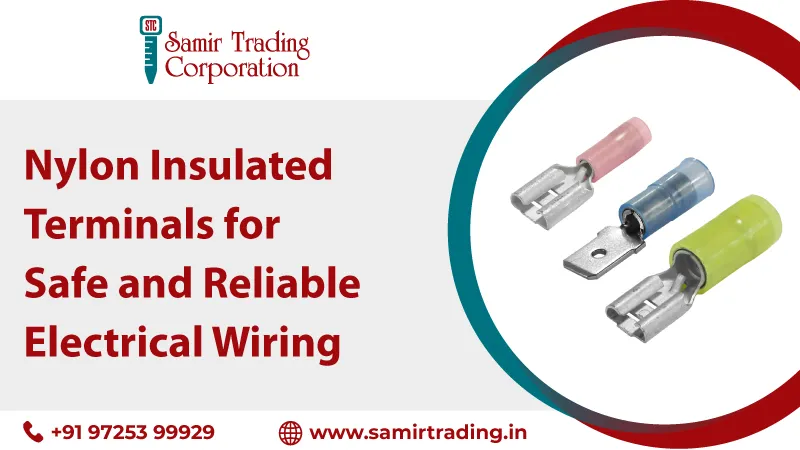
Electrical wiring demands precision, stability, and protection at every connection point. Even a small fault at a terminal can lead to power loss, overheating, or system failure. Nylon insulated terminals address this risk by combining secure metal conductivity with durable insulation. They protect connections, simplify installation, and support long-term electrical safety. This makes them a critical component in modern wiring systems across industries.
Nylon insulated terminals are widely used in control panels, industrial machinery, automotive wiring, appliances, and infrastructure projects. Their design supports clean connections while reducing exposure to live parts.
What Is Nylon Insulated Terminals
Nylon insulated terminals are electrical connectors with a metal core and an outer nylon insulation sleeve. The metal part conducts electricity, while the nylon insulation covers the crimp area and part of the conductor. This design protects users from accidental contact and reduces short-circuit risk. The metal core is usually made from copper or tinned copper. These materials offer good conductivity and corrosion resistance. The nylon insulation adds mechanical strength and electrical protection. Compared to vinyl insulation, nylon offers better durability and heat resistance.
These terminals support crimp connections, which create strong mechanical and electrical bonds. Once crimped properly, the connection remains stable under vibration and load. This makes nylon insulated terminals suitable for demanding environments. Reliable Nylon Insulated Suppliers provide terminals with consistent dimensions and material quality, which directly affects connection performance.
Why Insulation Matters in Electrical Terminals
Bare terminals expose conductive surfaces. This increases the risk of accidental contact, arcing, and short circuits. Insulation reduces these risks at the connection point. Nylon insulation resists abrasion and tearing. It maintains shape under pressure and temperature changes. This stability protects the crimped joint and conductor over time.
Insulated terminals also support organized wiring. Color-coded insulation helps identify wire sizes and circuit types. This improves installation speed and maintenance clarity. In safety-focused installations, insulated terminals are often preferred or required. Their role in reducing electrical hazards makes them essential for reliable wiring systems.
Key Benefits of Nylon Insulated Terminals
Nylon insulation improves electrical safety by covering live parts. The material resists heat and mechanical stress better than basic insulation. Crimped connections offer strong pull-out resistance. Color coding supports correct wire size selection.
They support clean and professional wiring layouts. They reduce maintenance issues caused by loose or exposed connections. These benefits explain why nylon insulated terminals remain a preferred choice across industries.
Material Properties That Support Reliability
Nylon offers higher tensile strength compared to vinyl. This reduces cracking and splitting during crimping. The insulation maintains shape under pressure. This protects the conductor and crimp joints. Nylons resist oils, greases, and common chemicals. This suits industrial environments. The material tolerates higher operating temperatures. This reduces insulation failure near heat sources. These properties contribute to long service life when terminals are sourced from reliable Nylon Insulated Suppliers.
Applications Across Industries
In electrical panels, nylon insulated terminals support safe termination of control and power wires. In industrial machinery, they handle vibration and movement without loosening. In automotive wiring, they protect connections exposed to heat and mechanical stress.
In appliances, they support compact and secure wiring layouts. In infrastructure projects, they improve safety and maintenance efficiency. Across these applications, quality terminals reduce downtime and rework.
Importance of Proper Crimping
Crimp quality directly affects performance. A proper crimp creates a gas-tight connection between wire and terminal. Under-crimping leads to loose connections and overheating. Over-crimping damages the conductor and insulation. Using the correct crimping tool matched to terminal size improves consistency. Inspection after crimping confirms alignment and grip. Professional installers rely on terminals from trusted Nylon Insulated Suppliers because consistent dimensions support accurate crimping.
Safety and Compliance Considerations
Electrical installations often follow safety standards that specify insulated connections. Nylon insulated terminals support compliance by reducing exposure to live conductors. Fire-retardant insulation options reduce risk in enclosed spaces. RoHS-compliant materials support environmental responsibility. Quality testing confirms insulation integrity and pull-out strength. Working with experienced suppliers helps meet these requirements without confusion.
Role of Color Coding in Nylon Insulated Terminals
Color coding indicates wire size range. Common colors include red, blue, and yellow. This system reduces installation errors. It speeds up wiring work and inspection. It improves clarity during maintenance and upgrades. Correct color selection supports reliable electrical performance.
Common Mistakes to Avoid
Using incorrect terminal size leads to weak connections. Crimping with improper tools damages terminals. Mixing wire sizes with mismatched terminals causes overheating. Choosing low-quality insulation increases failure risk. Avoiding these mistakes improves safety and system life.
Long-Term Cost Benefits
- Nylon insulated terminals reduce failure rates.
- Stable connections lower maintenance costs.
- Improved safety reduces downtime and repair expenses.
- Their durability offsets initial cost differences.
- This makes them an economical option for installations that last.
Market Demand for Nylon Insulated Terminals
Industrial automation increases wiring complexity. Infrastructure growth raises safety expectations. Electric vehicles and renewable energy systems require reliable connections. These trends drive demand for high-quality insulated terminals. Suppliers with technical depth gain long-term relevance.
Future Outlook for Insulated Terminals
Electrical systems continue to evolve. Higher safety standards drive demand for insulated connections. Material improvements support better heat and wear resistance. Quality-focused suppliers gain importance. Nylon insulated terminals remain a core component in safe wiring systems.
Why Choose Us
Samir Trading delivers nylon insulated terminals with a strong focus on safety and reliability. The company understands how insulation quality, metal conductivity, and crimp compatibility affect performance. Samir Trading supports customers with accurate specifications and practical guidance. Clients benefit from components that perform consistently across electrical panels, machinery, and infrastructure projects. This commitment to quality and clarity makes Samir Trading a dependable partner for nylon insulated terminal solutions.
Conclusion
Nylon insulated terminals play a critical role in safe and reliable electrical wiring. They protect connections, reduce electrical hazards, and support long-term system stability. Their material strength and insulation properties improve performance across industries. Proper selection and crimping further enhance reliability. Choosing the right supplier adds significant value. Samir Trading supports these needs with dependable products and technical clarity. For professional wiring systems that prioritize safety and durability, nylon insulated terminals remain a proven and practical solution.
For more information on nylon insulated terminals for safe and reliable electrical wiring, Call +91 9725399929 or email samirtradingcorp@gmail.com
Key Takeaways
- Enhanced Electrical Safety
Nylon insulated terminals cover live parts, reducing the risk of accidental contact, short circuits, and electrical faults, making wiring safer across industrial, automotive, and infrastructure applications. - Durable and Heat-Resistant Insulation
Nylon insulation offers superior durability compared to vinyl, with better resistance to heat, abrasion, oils, and chemicals, ensuring long-lasting and reliable connections. - Strong and Stable Connections
Properly crimped nylon terminals provide firm mechanical and electrical bonds that resist vibration and mechanical stress, preventing loose or unstable connections. - Improved Wiring Organization and Efficiency
Color-coded insulation and a variety of terminal types (ring, spade, fork, butt, disconnect) simplify installation, reduce errors, and support clear, professional cable management. - Value of Quality Suppliers
Sourcing from experienced Nylon Insulated Suppliers ensures consistent material quality, precise dimensions, compliance with safety standards, and reliable performance in demanding environments.